 Menu
Menu weather punta cana dominican republic

Discover everything you need to know about the tropical climate in this beautiful Caribbean destination. Learn about seasonal patterns, temperature averages, and essential travel tips to help you plan the perfect vacation and pack accordingly for your trip.
Overview of the Tropical Climate
When travelers envision their ideal Caribbean getaway, they immediately think of pristine white-sand beaches, crystal-clear turquoise waters, and endless days of brilliant sunshine. To make the most of this spectacular destination, understanding the weather punta cana dominican republic has to offer is absolutely essential. Situated on the easternmost tip of the island of Hispaniola, this renowned resort area boasts a classic tropical rainforest climate. This means that visitors can expect warm, welcoming temperatures year-round, making it a fantastic escape from the freezing winters of the northern hemisphere. The climate here is primarily defined by two main periods: a distinct dry season and a wetter season. However, unlike other global destinations where seasons dictate extreme changes in temperature, the variations here are remarkably subtle. The gentle trade winds that blow across the Atlantic Ocean provide a constant, cooling breeze that perfectly balances the tropical heat, ensuring that your days spent lounging by the ocean or exploring local attractions remain incredibly comfortable.
The Dry Season: December to April
For the majority of international visitors, the period between December and April represents the absolute optimal time to visit. During these months, the weather punta cana dominican republic experiences is characterized by lower humidity levels, minimal rainfall, and incredibly pleasant temperatures. Daytime highs comfortably hover around 82°F to 86°F (28°C to 30°C), while the evenings bring a slightly cooler, refreshing breeze that drops the temperature to about 70°F to 75°F (21°C to 24°C). Because of these ideal conditions, this period is considered the peak tourist season. The skies are generally a spectacular, cloudless blue, creating the perfect backdrop for outdoor excursions, catamaran cruises, and snorkeling adventures. If you are traveling during these months, you will rarely encounter a day that is interrupted by rain. The crisp, dry air also means that the evenings are exceptionally comfortable for dining al fresco under the stars. Because the weather is so reliable during this window, it is highly recommended to book your accommodations, activities, and airport transfers well in advance to secure your spot in paradise.
The Wet Season: May to November
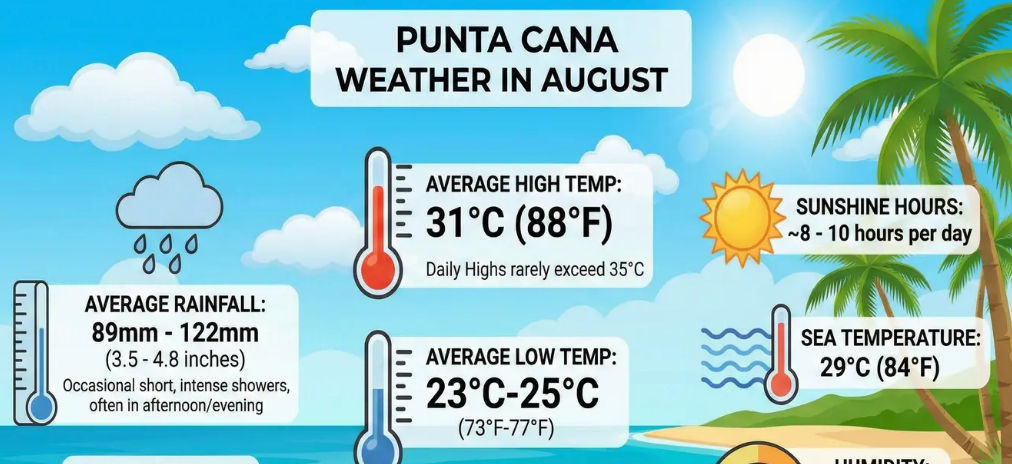
As the calendar shifts into May and progresses through November, the region enters its warmer, more humid period, often referred to as the wet season. During this time, the weather punta cana dominican republic presents involves slightly higher temperatures, often reaching up to 90°F (32°C) during the peak of the day. The humidity levels increase, giving the air a distinctly thicker, more tropical feel. While it is called the wet season, it is vital to understand that this does not mean continuous, all-day rainfall. Instead, precipitation typically arrives in the form of short, heavy, and isolated tropical downpours, which frequently occur in the late afternoon or overnight. These showers are usually brief, quickly giving way to bright sunshine once again. This period also intersects with the official Atlantic hurricane season, which runs from June through November. While the chances of a direct strike are statistically low, it is something travelers should monitor. Visiting during these months offers the advantage of fewer crowds, warmer ocean waters, and lush, vibrantly green landscapes fueled by the passing rain showers.
Average Temperatures and Sunlight Hours
Consistency is the hallmark of the weather punta cana dominican republic provides. Regardless of the month you choose for your vacation, you are guaranteed a warm, tropical environment. The average annual temperature rests comfortably at 80°F (26°C). The sea temperature is equally inviting, rarely dropping below 79°F (26°C) in the winter and warming up to a bath-like 84°F (29°C) in the late summer months. This makes swimming, diving, and water sports enjoyable 365 days a year. Furthermore, the region is blessed with an abundance of daylight. Visitors can expect an average of 8 to 9 hours of glorious, direct sunshine per day. It is crucial to remember that the sun in the Caribbean is incredibly strong. The UV index is exceptionally high, especially between the hours of 10:00 AM and 3:00 PM. Travelers must take this into account when planning their daily itineraries, ensuring they take adequate breaks in the shade and stay hydrated to fully enjoy the spectacular environment.
Smart Packing for the Caribbean Climate
Packing correctly for the weather punta cana dominican republic offers will significantly enhance your vacation experience. The key is to focus on lightweight, breathable fabrics such as cotton, linen, and moisture-wicking athletic wear. These materials will help you stay cool during the warm days and manage the humidity effectively. Swimwear is, of course, an absolute necessity, along with a wide-brimmed hat, polarized sunglasses, and an abundance of reef-safe sunscreen to protect both your skin and the delicate marine ecosystems. If you are traveling during the wetter months, tossing a small, travel-sized umbrella or a lightweight rain jacket into your daypack is a smart move for those sudden afternoon showers. For the evenings, especially during the dry season, a light sweater or a long-sleeved linen shirt can be surprisingly useful, as the ocean breeze can occasionally feel cool after a long day in the hot sun. Finally, comfortable walking sandals and water shoes are highly recommended for exploring the resorts and navigating rocky shorelines.
Navigating the Island: Weather and Transportation
When dealing with a tropical climate, how you choose to move around the island can make or break your arrival experience. Stepping out of the airport into the intense humidity and heat of the Caribbean can be overwhelming, especially after a long flight. This is where securing premium private transportation becomes a game-changer. Instead of waiting in long, unshaded taxi lines or piling into a crowded, poorly ventilated shared shuttle, booking a private transfer ensures that an air-conditioned, meticulously maintained vehicle is waiting exactly when you arrive. Whether you are dealing with the peak heat of August or a sudden tropical downpour in October, a professional driver provides a seamless, comfortable transition from the airport terminal directly to your resort's lobby. This level of reliable, climate-controlled transportation not only protects you from the unpredictable elements but also sets a relaxed, luxurious tone for the entirety of your Caribbean vacation.
Frequently Asked Questions (FAQ)
What is the best month to visit regarding the climate?
March and April are widely considered the best months. You get the perfect combination of clear skies, very low rainfall, and comfortable temperatures that are not overly hot, avoiding the peak humidity of the summer.
Does it rain all day during the wet season?
No, it rarely rains all day. The typical pattern during the wet season involves bright, sunny mornings followed by brief, intense showers in the late afternoon. The clouds usually clear up rapidly, allowing you to enjoy a beautiful evening.
Is the ocean water warm enough for swimming in December?
Absolutely. The ocean temperatures remain incredibly comfortable year-round. Even in December and January, the water temperature averages around 79°F to 80°F (26°C to 27°C), making it perfectly inviting for swimming and snorkeling.
Do I need to worry about hurricanes?
While the region is located in the Caribbean hurricane belt (with the season running from June to November), direct hits are relatively uncommon. Resorts are built to strict structural standards and have excellent early warning systems in place.
How should I dress for the high humidity?
Opt for loose-fitting, light-colored clothing made from natural fibers like linen or 100% cotton. Avoid heavy synthetic materials that trap heat. Staying cool is all about allowing your skin to breathe in the tropical environment.